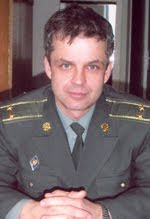
About 3,500 local inhabitants and guests have visited Poltava Battle Museum during three jubilee days of July 25th, 26th, and 27th, 2009. The museum has received a profit about 22,000 hryvnas (19,000 SEK) from such a big spate of visitors. The daily norm for museum visitors during 2008 was within 70 - 80 visitors and daily profit – 400 hryvnas, respectively. Such numbers testify a fast growing tourist potential of the city. Now the stuff of the museum is thinking about how to make a flow of tourist to the museum grow. About 5,000 foreign tourists visited Poltava to participate marking of 300th anniversary of the Battle of Poltava. Mostly they represented Russia, Sweden, Finland, Denmark, Germany, and United States. Poltava received 28 official delegations. About 30,000 spectators attended reconstructed Battle of Poltava around newly built redoubt on the battle field. The City Council has expressed satisfaction over the marking was not politicized in spite of a big difference between Swedish, Russian and Ukrainian point of view on the decisive battle of the Stora Nordiska Kriget.
Wednesday, September 30, 2009
Statistics of the marking of 300th anniversary of the Battle of Poltava
Posted by Oleg Bezverkhnii at 14:13
Monday, September 28, 2009
On September 23rd Poltava celebrated the City Day
On September 23rd Poltava celebrated the City Day. 66 years ago Poltava was liberated by advancing troops of the Red Army. A unique photo of the Red Army soldier and Red Flag over the Glory Monument in Poltava was taken by unknown photographer on September 23rd. Poltava was liberated soon after the battle of Kursk. It remains both the largest series of armoured clashes, including the Battle of Prokhorovka, and the costliest single
day of aerial warfare to date. It was the last strategic offensive the Germans were able to mount in the east. The resulting decisive Soviet victory gave the Red Army the strategic initiative for the rest of the war. Here is a quotation from the order of Marshal Josef Stalin to Army General Ivan Konev who commanded the Ukrainian Front (later renamed the First Ukrainian Front) dated after September 23rd, 1943."Today, September 23, at 21.00 hours the capital of our Motherland, Moscow, on behalf of the Motherland, will salute with 12 artillery salvoes from 124 guns our gallant troops which liberated the town of Poltava. For excellent military operations, I express my thanks to all troops commanded by you who participated in the fighting for the liberation of the town of Poltava. Eternal glory to the heroes who fell in the fight for the freedom and independence of our Motherland. Death to the German invaders!"
Many flowers and wreaths were laid at the Memorial to the Glory of Soldiers on September 23rd. This memorial was opened in October 1969 in Kotlyarevsky Park on the site of the former city cemetery. All remains of the soldiers and officers that had been killed during the liberation of Poltava were moved from Petrovsky Park to the newly unveiled memorial. The Memorial contains 21 common graves and 22 separate graves covered with granite tombstones. The monument itself is shaped in the form of a 22-meter high bayonet and a 6-meter high sculpture of a soldier wearing military gear and holding a shield with a bas relief of the Glory Monument. An Eternal Flame is located at the base of the monument.

Many flowers and wreaths were also laid at the monument to Lieutenant-General Zygin. The monument was unveiled in 1957 on the square named after him. Zygin was promoted in September 1943 to Commander of the 4th Army that participated in the battle for the Dnieper River. Shortly after his promotion, on the 27th of September, his car was blown up by a German mine. Lieutenant-General Zygin was buried in Poltava.
Posted by Oleg Bezverkhnii at 13:56
Thursday, September 24, 2009
The 100th anniversary of foundation of Poltava Battle Museum

An official ceremony dedicated to the centenary of Poltava Battle Museum has taken place on September 21st, 2009. Museum was founded in 1909 due to the efforts its first director, Lieutenant Colonel Ivan Pavlovsky, who served at the time as a teacher of history at the Poltava Cadet School. The initial display of the one-room museum was not very large. It included old
Russian and Swedish firearms and coldsteel, regimental colours and uniforms as well as portraits of the Swedish and Russian commanders. After the Revolution of 1917, the Poltava Battle Museum, as so many other historical sights, was left unattended. In 1950 the museum was reopened in a late 19th century building that had been used as a hospital for disabled veterans of Russian-Turkish war.
As a gift from Poltava Oblast Branch of Raiffeisen Bank Aval for the 100th anniversary Poltava Battle Museum got about 40 copies of unique documents that were discovered by LTC Oleg Bezverkhnii in Krigsarkivet (Stockholm, Sweden) in the University of Helsinki's Slavonic Library (Finland), and in some private Ukrainian archives.
All these findings were shown to the Poltava public on June 24th, 2009, on the eve of marking of 300th anniversary of the Battle of Poltava. The gift was handed over to the museum by Volodymyr Shyyan, Head of Poltava Oblast Branch of Raiffeisen Bank Aval. The first museum of the Battle of Poltava has been fully reconstructed in its original shape recently. Poltava City Council decided to create a museum of Lieutenant Colonel Ivan Pavlovsky and the first museum of the Poltava Battle Museum in this building soon.
To read more about Poltava Battle Museum in Swedish language click on following link
http://www.battle.poltava.ua/svensk/museum.htm
Russian and Swedish firearms and coldsteel, regimental colours and uniforms as well as portraits of the Swedish and Russian commanders. After the Revolution of 1917, the Poltava Battle Museum, as so many other historical sights, was left unattended. In 1950 the museum was reopened in a late 19th century building that had been used as a hospital for disabled veterans of Russian-Turkish war.As a gift from Poltava Oblast Branch of Raiffeisen Bank Aval for the 100th anniversary Poltava Battle Museum got about 40 copies of unique documents that were discovered by LTC Oleg Bezverkhnii in Krigsarkivet (Stockholm, Sweden) in the University of Helsinki's Slavonic Library (Finland), and in some private Ukrainian archives.
All these findings were shown to the Poltava public on June 24th, 2009, on the eve of marking of 300th anniversary of the Battle of Poltava. The gift was handed over to the museum by Volodymyr Shyyan, Head of Poltava Oblast Branch of Raiffeisen Bank Aval. The first museum of the Battle of Poltava has been fully reconstructed in its original shape recently. Poltava City Council decided to create a museum of Lieutenant Colonel Ivan Pavlovsky and the first museum of the Poltava Battle Museum in this building soon.To read more about Poltava Battle Museum in Swedish language click on following link
http://www.battle.poltava.ua/svensk/museum.htm
Posted by Oleg Bezverkhnii at 13:10
Tuesday, September 22, 2009
Ukrainian students take care of Swedish monument

The monument to the fallen Swedish warriors erected by their compatriots near the village Pobyvanka is one of the most interesting sights of the Poltava Battle field. About 5,000 Swedish crowns were collected in the beginning of 20th century from citizens throughout Sweden for a big granite stone (6 m height, 20 ton weight) from the Vånevik quarry in Småland (Kalmar län). The memorial stone was unveiled on June 2nd 1909 close to the hamlet of Pobyvanka without any public ceremony. A small article “De svenskes vård öfver stupade svenska hjältar” dedicated to the event was published on July 7th 1909 in the Swedish newspaper “Stockholms Dagblad.”
Although The City Council of Poltava has discussed what needs to be done to routinely maintain the monument, nothing has been changed recently. Only in 2004 the monument was wholly reconstructed thanks to donation of Tetra Pak Ukraine company. Since that time the monument is almost neglected. On Spetember 19th 2009 a group of students from Poltava Agrarian Academy including three students from Public's Republic of China under the head of LTC Oleg Bezverkhnii and teacher Elena Koschenko have collected a lot of garbage around the monument. During this ecological action Oleg Bezverkhnii has told them a touching story about Great Northern war and it decisive battle.

Students also visited the monument dedicated to the reconciliation between Sweden, Russia, and Ukraine that was opened on June 27th, 2009 when these countries were marking 300th anniversary of the Battle of Poltava.
Learn more about Swedish monument at
http://www.battle.poltava.ua/svensk/swedish_monument.htm
Learn more about Swedish monument at
http://www.battle.poltava.ua/svensk/swedish_monument.htm
Posted by Oleg Bezverkhnii at 13:44
Friday, September 18, 2009
Ukrainian soldiers hospitalized for food poisoning
A group of fifteen soldiers from Presidential Regiment in Kiev were stricken on September 15 with food poisoning after eating bad quality food in regimental canteen, UNIAN news agency reported. According to an official from Land Forces Command press-centre, other 153 servicemen that have been in contact with diseased soldiers were placed in quarantine for further close medical supervision but were reported to be in satisfactory condition. The exact cause of the food poisoning is still being investigated. The results of bacteriological analysis are expected to be ready not earlier than September 21st. The Presidential Regiment in Kiev is undoubtedly one of the most elite regiments in the Armed Forces of Ukraine.

Posted by Oleg Bezverkhnii at 12:21
Thursday, September 17, 2009
Tu-22M bombers in Poltava. Chronology of elimination.
The Tu-22M was developed from the earlier Tu-22 design, incorporating variable-geometry outer wing panels. It lacks sufficient range for truly strategic missions and is classified as a medium bomber. The first series production model was the Tu-22M-2 “Backfire”-B (211 built) for the Soviet Air Forces and the Naval Aviation Forces. The ultimate bomber/missile carrying variant is the Tu-22M-3 “Backfire” equipped with one 23-mm cannon in remotely-operated tail turret, AS-4 “Kitchen” stand-off missiles, 6 x AS-16 “Kickback” nuclear missiles, AS-17 “Krypton” and AS-20 “Kayak” air-to-surface missiles. It had the capacity to carry up to 3 tons of free-fall bombs.1981: Eighteen Tu-22M3 were deployed in Poltava. This variant became operational with 185 Guard Heavy Bomber Aviation Regiment at Poltava and also served in Afghanistan.
January 1996: Twenty Tu-22M3 bombers were deployed in Poltava. In January 1996 four Tu-22M3 bombers arrived in Poltava. The bombers were transferred to Ukraine as part of the process of dividing the Black Sea Fleet.
November, 2001: US to help Ukraine eliminate 47 Tu-22M bombers. UNIAN reported on 4 November 2001 that the director of the US SOAE (Strategic Offensive Arms Elimination) program in Ukraine, John Connell, announced that the US government will help Ukraine eliminate 47 Tu-22M bombers.
October 14th, 2002: Ukraine begins Tu-22, Tu-22M bomber elimination under a contract issued by the US company Raytheon and funded by the US government. Bombers were scrapped at Mykolayiv and Poltava air bases. The first bomber was eliminated on 12 November 2002. The last Backfire bomber was destroyed in 2004.
May 29th 2006: A Tu-22 M3 heavy bomber “Backfire” is seen with its fuselage cut in two pieces at a military airfield in the city of Poltava. Only a few pictures were taken by UNIAN news agency and published in the Internet later on. In framework of a U.S.-funded disarmament program, Ukraine is expected to dismantle 31 aircraft in more than two years. Ukraine inherited the world's third-largest nuclear arsenal with the 1991 Soviet Union's collapse, including hundreds of missiles and dozens of strategic bombers. In the former airbase in Poltava there is a monument deicated to 185 Guard Heavy Bomber Aviation Regiment.

Learn more about Tu-22 M3 heavy bomber “Backfire” on Swedish language at
http://sv.wikipedia.org/wiki/Tupolev_Tu-22M
Watch video about Tu-22 M3 heavy bomber “Backfire” at
http://www.youtube.com/watch?v=K0_YM_wRq3s&NR=1
http://sv.wikipedia.org/wiki/Tupolev_Tu-22M
Watch video about Tu-22 M3 heavy bomber “Backfire” at
http://www.youtube.com/watch?v=K0_YM_wRq3s&NR=1
Posted by Oleg Bezverkhnii at 15:10
Wednesday, September 16, 2009
Russia and Belarus started a joint military exercise
Russia and Belarus started a large-scale military exercise involving about 12,500 service personnel and up to 200 items of military equipment and hardware, the Russian Defence Ministry said on Tuesday. The drill, called Zapad 2009 (West 2009), takes place in Russia and Belarus and will end on September 29.
"The plan for the exercises was developed jointly by the Russian and Belarusian Armed Forces General Staffs and is purely defensive," the ministry said, adding that tasks to be practiced include dealing with armed conflicts, natural and man-caused disasters and ensuring strategic deterrence as well as the security of the Russia-Belarus Union State. The ex-Soviet neighbours announced plans in the late 1990s to form a union state in a bid to achieve greater political, economic and military
integration, but the project has largely existed on paper. The exercise will, among other things, rehearse interoperability within the framework of the Belarusian-Russian integrated air defence system, which the two countries agreed to establish recently. Russia is represented by the Moscow Military District units, Ground Forces, Air Force, Air Defence Forces, Airborne Troops and Baltic Fleet naval task forces, and Belarus by operational command units, Interior Ministry, Emergencies Ministry and State Security Committee troops. The exercise will involve 5,000-6,000 Russian servicemen and 7,000-8,000 Belarusian servicemen, as well as up to 40 aircraft.
"The plan for the exercises was developed jointly by the Russian and Belarusian Armed Forces General Staffs and is purely defensive," the ministry said, adding that tasks to be practiced include dealing with armed conflicts, natural and man-caused disasters and ensuring strategic deterrence as well as the security of the Russia-Belarus Union State. The ex-Soviet neighbours announced plans in the late 1990s to form a union state in a bid to achieve greater political, economic and military
integration, but the project has largely existed on paper. The exercise will, among other things, rehearse interoperability within the framework of the Belarusian-Russian integrated air defence system, which the two countries agreed to establish recently. Russia is represented by the Moscow Military District units, Ground Forces, Air Force, Air Defence Forces, Airborne Troops and Baltic Fleet naval task forces, and Belarus by operational command units, Interior Ministry, Emergencies Ministry and State Security Committee troops. The exercise will involve 5,000-6,000 Russian servicemen and 7,000-8,000 Belarusian servicemen, as well as up to 40 aircraft.RIA NOVOSTI http://en.rian.ru/
Posted by Oleg Bezverkhnii at 13:48
Subscribe to:
Posts (Atom)