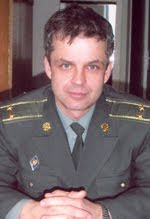
Kyiv (INTERFAX). November 5, 2009. A contract with Brazil about the supply of Ukrainian tanks may be signed by spring of 2010, Ukrainian Prime Minister Yulia Tymoshenko has said. "I believe that the contract will appear in few months, because they (representatives of Brazil) will send a task force to Ukraine by January 15, which will be working to prepare a relevant agreement, analyzing technical and financial aspects, and I believe that by spring we will have the contract signed," she said while addressing the workers of the Morozov Machine Building Design Bureau (KMDB) in Kharkiv on Saturday, November 5. The premier noted that the Brazilian Defense Minister Nelson Jobim, who was in Kharkiv during the visit of his country's delegation to Ukraine, saw the Ukrainian Oplot tank and took a great interest it. After this she was listening for half an hour for the minister, "who was excitedly telling her about the Oplot, as if it already had been his tank," Tymoshenko added.
Sunday, December 6, 2009
Ukraine, Brazil may sign deal about Oplot tanks supply by spring 2010
Posted by Oleg Bezverkhnii at 17:48
A new accident in Russia
PERM, Russia (Reuters) - Russian investigators blamed management negligence for a blaze at a provincial nightclub on Sunday, December 6, 2009 that killed 110 people as relatives gathered at a central morgue on Sunday to identify the charred remains of loved ones. Eyewitnesses said sparks from fireworks set fire to wicker coverings on the walls and ceiling of the packed club on Friday, and that a stampede broke out as more than 200 guests rushed toward a single narrow exit. An initial investigation found the club was not equipped with automatic fire extinguishers and that fireworks should not have been used there, Marina Zabbarova, head of the Russian Prosecutor General's Investigative Committee for Perm region, said.
Posted by Oleg Bezverkhnii at 17:08
Thursday, December 3, 2009
Izhevsky armament plant
The largest firearms producer in Russia joint-stock company "IZHMASH" was founded by the order of the Russian Tsar Alexander I in 1807. It is hard to overestimate the significance of the plant in Russian history. Almost all types of firearms were produced here. About 11.3 million rifles and carbines were manufactured during the WWII. This number exceeds the quantity of firearms produced by all German firearm plants taken together (10.3 million). Besides, IZMASH mastered the mass production of antitank weapons, aircraft automatic guns, pistols and revolvers. Every day and night IZHMASH used to arm 1 infantry and airborne divisions. The postwar period of almost two century history of the plant is connected with production of the Kalashnikov assault rifle AK-47, which is still adopted in Armed and Special Forces of 106 countries all over the world. On attached pictures you can see a main office building of the plant, Russian President Mikhail Medvedev visiting the plant, and Kalashnikov’s museum.
Presently the company produces:
- military firearms;
- sporting-hunting weapons;
- aircraft automatic guns;
- guided artillery gunning complexes;
- test vehicles for maintenance and repair of tank armaments;
- new models of bikes;
- cars;
Presently the company produces:
- military firearms;
- sporting-hunting weapons;
- aircraft automatic guns;
- guided artillery gunning complexes;
- test vehicles for maintenance and repair of tank armaments;
- new models of bikes;
- cars;
Posted by Oleg Bezverkhnii at 13:23
Wednesday, December 2, 2009
The exhibition in the Moscow Kremlin
More pictures about International Exhibition dedicated to the Battle of Poltava and hosted by Moscow Kremlin now are available at
http://artnewsportal.blogspot.com/2009/11/kremlin-museum-hosts-poltava-battle.html
Some of them are really very impressive.
http://artnewsportal.blogspot.com/2009/11/kremlin-museum-hosts-poltava-battle.html
Some of them are really very impressive.
Posted by Oleg Bezverkhnii at 11:51
Tuesday, December 1, 2009
Tula Arms Plant
Tula Arms Plant is a Russian weapons manufacturer founded by Tsar Peter I of Russia in 1721 in Tula, Russia as Tula Arsenal. Throughout history, it has produced weapons for whoever controlled the Russian state. Its name changed from Tula Arsenal to Tula Arms Plant during the Soviet era. Tula was strategically important to the Soviet Union during the Cold War. Significant ore deposits were situated relatively close to it and it had access to ample transportation routes like the Upa River and many rail lines coming into and out of the city. During World War II, the German army invaded Russia as part of Operation Barbarossa. By December 5, 1941 the German 2nd Panzer Division had advanced to within a few kilometers of Tula, forcing the Soviets to abandon Tula Arms Plant. As a result, far fewer weapons were produced there than at other Soviet factories such as Izhevsk Mechanical Works. Consequently, Tula weapons of World War II are considered more valuable by collectors. During the Soviet era, Tula Arms Plant produced other military rifles, including Mosin-Nagant Rifle, Nagant M1895 Revolver, assault automatic rifle AK-47, and semi-automatic carbine SKS (see foto)

Posted by Oleg Bezverkhnii at 08:44
Monday, November 30, 2009
A new wave of the rail war in Russia
An improvised explosive device caused the express train Moscow-St. Petersburg to derail on November 29, killing at least 26 people and injuring about 100. A total of 681 people -- 20 of them employees -- were on the Nevsky Express as it traveled from Moscow to St. Petersburg on Friday night. The Nevsky Express is Russia's fastest train, equivalent to a bullet train. The crash happened at 9:25 p.m. (1825 GMT) when the train was 280 kilometers (174 miles) from St. Petersburg, Russian state radio said. At least three carriages carrying more than 130 people derailed and turned on their sides. Emergency workers freed people who were trapped inside. In August 2007, an explosion on the tracks derailed the Nevsky Express, injuring 60 people in what authorities called a terrorist act. About 27,000 passengers on 60 trains were facing delays Saturday as a result of the accident, Russian state TV reported.
Another explosion hit a railway in Russia’s Caucasian region of Dagestan on 30 November. "A railway was hit by an explosion before a train travelling from Tyumen to (Azerbaijan’s capital) Baku passed. The train did not derail, although the locomotive pulled the carriages about 150 meters along the damaged rails," a local police official was quoted as saying. “The incident took place at about 06:00, Moscow time on the 2354 kilometre of the Moscow-Baku railway not far from the Inchkhe station,” police official added. The train was stopped by law enforcement officers, and rescue workers were involved. There are no casualties
Read more and see more pictures at http://edition.cnn.com/2009/WORLD/europe/11/29/russia.train.crash/
http://en.trend.az/capital/transport/1589509.html
Another explosion hit a railway in Russia’s Caucasian region of Dagestan on 30 November. "A railway was hit by an explosion before a train travelling from Tyumen to (Azerbaijan’s capital) Baku passed. The train did not derail, although the locomotive pulled the carriages about 150 meters along the damaged rails," a local police official was quoted as saying. “The incident took place at about 06:00, Moscow time on the 2354 kilometre of the Moscow-Baku railway not far from the Inchkhe station,” police official added. The train was stopped by law enforcement officers, and rescue workers were involved. There are no casualties
Read more and see more pictures at http://edition.cnn.com/2009/WORLD/europe/11/29/russia.train.crash/
http://en.trend.az/capital/transport/1589509.html
Posted by Oleg Bezverkhnii at 10:39
Thursday, November 26, 2009
On the site of the fortress of Nynskans

Nyenskans was a Swedish fortress built in 1611 at the mouth of the Neva river in Swedish Ingria on the site of the present day St. Petersburg in Russia. On May 1, 1703, during the Ingrian campaign of the Great Northern War, the fortress of Nyenskans was taken by Peter the Great and renamed Schlotburg, "Neck-town", after the long narrow section of the Neva river where it was located. The last Swedish commandant of Nyenskans was Colonel Johan Apolloff, preceded by Colonel Alexander Pereswetoff-Morath (the son of Russian noblemen, who had entered Swedish service in the first decades of the seventeenth century). Having fallen into Russian hands the fortress functioned only for some weeks, and very soon the tsar founded the fortress and city of Saint Petersburg near the site. Nothing remains of Nyen above ground (as the land has been used for industrial development), but a few years ago a monument was opened on the site of the fortress, at the mouth of the Okhta river to a design by V. A. Reppo. In the early winter of 2007 remains of the fortress bastions were identified during archaeological excavations, which were necessitated by the threat of irrecoverable exploitation of the entire site.

Posted by Oleg Bezverkhnii at 13:24
Subscribe to:
Posts (Atom)


