
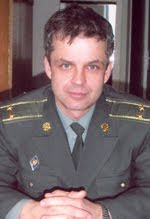
 October 28, 2010 (Interfax-Ukraine). Ukraine is preparing to deliver its first eleven BTR-4 armored vehicles to Iraq in November under a large-scale contract on arms supply worth over $550 million struck in 2009. This was reported by the Ukrainian deputy industrial policy minister in charge of defense industry, Kostiantyn Kucher. "January 6 is the Day of the Iraqi Army, one of the country's most important events and one of the largest holidays. Therefore in January our eleven BTR-4 vehicles will participate in the parade," he told reporters in Kharkiv on Thursday. In 2009, the subsidiary of state-owned Ukrspetsexport – state-run Progress specialized foreign trade firm – signed a contract with Iraq worth more than $550 million, which is supposed to be one of an upcoming series of contracts in the sphere of military and technical cooperation between Ukraine and Iraq. The contract foresees the delivery more than 400 armored vehicles, in particular the BTR-4, about 10 An-32 aircraft, and aircraft repair services over three to three-and-a-half years.Among the major contractors are Kharkiv-based Morozov Engineering Design Bureau, Kharkiv-based state-run Malyshev plant, and Antonov State Enterprise. According to Antonov State Enterprise, the first three An-32 aircraft will be delivered to Iraq by the end of this year, and another three in 2011-2012.
 Thursday, October 28, 2010
Ukraine to deliver first batch of armored vehicles to Iraq
October 28, 2010 (Interfax-Ukraine). Ukraine is preparing to deliver its first eleven BTR-4 armored vehicles to Iraq in November under a large-scale contract on arms supply worth over $550 million struck in 2009. This was reported by the Ukrainian deputy industrial policy minister in charge of defense industry, Kostiantyn Kucher. "January 6 is the Day of the Iraqi Army, one of the country's most important events and one of the largest holidays. Therefore in January our eleven BTR-4 vehicles will participate in the parade," he told reporters in Kharkiv on Thursday. In 2009, the subsidiary of state-owned Ukrspetsexport – state-run Progress specialized foreign trade firm – signed a contract with Iraq worth more than $550 million, which is supposed to be one of an upcoming series of contracts in the sphere of military and technical cooperation between Ukraine and Iraq. The contract foresees the delivery more than 400 armored vehicles, in particular the BTR-4, about 10 An-32 aircraft, and aircraft repair services over three to three-and-a-half years.Among the major contractors are Kharkiv-based Morozov Engineering Design Bureau, Kharkiv-based state-run Malyshev plant, and Antonov State Enterprise. According to Antonov State Enterprise, the first three An-32 aircraft will be delivered to Iraq by the end of this year, and another three in 2011-2012. Cossack descendant and a conqueror of Paris

Born in the Kharkiv region, Serhii Vasylkivsky like nobody else felt and managed to portray the image of Ukraine that fascinated French art galleries.
Serhii Vasylkivsky is known as the poet of Ukrainian painting. The famous Kharkiv-based writer, historian, composer, social and political activist Hnat Khotkevych (one of those shot in the 1930s) said of his compatriot: “When a wide field, all shining with light, will look at you from the canvases, and you’ll hear the lark’s singing, how easily and freely you’ll breath the air that the painter is pouring on you in waves and even like a river. And he, who lived one life with nature, who cried over sounds and colors, makes you tremble before the mysteries of life discovered by him, listen to the nightingale’s splendid song and sorrowful cooing of turtledove…”
One of the famous Ukrainian painters of the late 19th-early 20th century, Serhii Vasylkivsky was born in the Kharkiv region. His works, mostly landscapes of Podniprovia, Podillia, Slobozhanshchyna, Poltava region genre paintings, and historical canvases, create a deep romantic image of Shevchenko’s Ukaine. Armed Cossack-riders in the steppe or a group of Cossacks on guard, in cavalry march, or resting — these are some of the main themes of Vasylkivsky. In order to convey the spirit of the era, Vasylkivsky interspersed his contemporary images of Ukraine with lyrical digressions and historical landscapes portraying Cossacks themes. A descendant of a Cossack, the artist was a child of nature. He tried to put on canvas everything that he saw, felt, and imagined.
However, it would be a mistake to believe that Vasylkivsky’s work has only a local Ukrainian dimension. His works were also understood and prized in Paris. After training at the Landscape Scenery Workshop of the St. Petersburg Art Academy in 1885, Vasylkivsky was conferred the title of first-grad artist. He received one golden and five silver medals for scenery sketches, in which the artist conveyed the picturesque qualities of Ukrainian nature. He also received a big golden medal and the right to go abroad for professional development for the painting On Donets at the All-Russian Academic Exhibition. His next victory was in Paris, which opened to Vasylkivsky the doors to exhibits of Paris art galleries — his works there were highly prized, a rarity for foreign artists.
Vasylkivsky was a very prolific painter. The artist produced 45-50 paintings every year, many of which are still stored in Ukainian museums, first of all, at the Kharkiv Art Museum.
Vasylkivsky’s creative work, with its timeless value, can also be useful for the modern Ukrainian society that is suffering from the East-West stereotypes imposed upon it. Vasylkivsky, an artist born in Kharkiv province, felt and reproduced the metaphysical image of Shevchenko’s Ukraine in a way that nobody else has ever done. And it was that very image that fascinated Paris.
One of the famous Ukrainian painters of the late 19th-early 20th century, Serhii Vasylkivsky was born in the Kharkiv region. His works, mostly landscapes of Podniprovia, Podillia, Slobozhanshchyna, Poltava region genre paintings, and historical canvases, create a deep romantic image of Shevchenko’s Ukaine. Armed Cossack-riders in the steppe or a group of Cossacks on guard, in cavalry march, or resting — these are some of the main themes of Vasylkivsky. In order to convey the spirit of the era, Vasylkivsky interspersed his contemporary images of Ukraine with lyrical digressions and historical landscapes portraying Cossacks themes. A descendant of a Cossack, the artist was a child of nature. He tried to put on canvas everything that he saw, felt, and imagined.
However, it would be a mistake to believe that Vasylkivsky’s work has only a local Ukrainian dimension. His works were also understood and prized in Paris. After training at the Landscape Scenery Workshop of the St. Petersburg Art Academy in 1885, Vasylkivsky was conferred the title of first-grad artist. He received one golden and five silver medals for scenery sketches, in which the artist conveyed the picturesque qualities of Ukrainian nature. He also received a big golden medal and the right to go abroad for professional development for the painting On Donets at the All-Russian Academic Exhibition. His next victory was in Paris, which opened to Vasylkivsky the doors to exhibits of Paris art galleries — his works there were highly prized, a rarity for foreign artists.
Vasylkivsky was a very prolific painter. The artist produced 45-50 paintings every year, many of which are still stored in Ukainian museums, first of all, at the Kharkiv Art Museum.
Vasylkivsky’s creative work, with its timeless value, can also be useful for the modern Ukrainian society that is suffering from the East-West stereotypes imposed upon it. Vasylkivsky, an artist born in Kharkiv province, felt and reproduced the metaphysical image of Shevchenko’s Ukraine in a way that nobody else has ever done. And it was that very image that fascinated Paris.
Monday, October 25, 2010
Ukraine’s top bribe-takers are traffic policemen and hospital staff
Traffic police and doctors extort bribes from Ukrainian citizens more frequently than any other profession. This was one of the findings of the sociological survey presented in Kharkiv by the Kyiv International Institute of Sociology, UNIAN reports.
 Thus, according to the poll, 91 percent of Ukrainians believe corruption is strongly widespread or rather widespread in Ukraine. When asked about their personal experiences, respondents most commonly cited two cases: public hospitals demanding unofficial payments for better treatment, and the traffic police extorting money instead of fining offenders. Forty-six percent of respondents paid bribes in hospitals more than once, 12 percent indicated that they had to pay just once. The traffic police received bribes more than once from 22 percent of respondents, while only four percent paid once. However, the study showed that Ukrainians were less pessimistic about the direction of the country’s development. Thus, 44 percent (compared to 74 percent in 2009, and 76 percent in 2008) of respondents believed that Ukraine was heading towards instability and chaos, while 21 percent (seven percent in 2009) believed that Ukraine was heading towards stability and prosperity. However, most respondents (83 percent) were dissatisfied with the economic situation this year, with 60 percent also being dissatisfied with the political situation (92 percent in 2009). 75 percent of respondents expressed concern about inflation (58 percent in 2009). Serious concerns were also expressed regarding other economic issues. These included unemployment (56 percent), poverty (51 percent), corruption (37 percent) and general economic issues (36 percent). This year’s political problems concerned 11 percent of respondents. The study was conducted September 8 through 20, with 1,519 respondents throughout Ukraine.
Saturday, October 23, 2010
Three bombs went were detonated in Kirovohrad on Oct. 22 hours before President Viktor Yanukovych's scheduled visit to the city.
Three small bombs went off next to government buildings in the Ukrainian city of Kirovograd on Thursday night, hours before a visit by President Viktor Yanukovich, the Interior Ministry said on Friday. A ministry statement said it regarded the blasts, which shattered several windows in one of the buildings but did not cause any injuries, as acts of hooliganism. Parts of an artillery shell, a clock and a battery were found next to one of the buildings targeted, the state prosecutor's office. Two other blasts targeted police and court buildings, the statement said. The ministry has not reported any arrests or detentions in connection with the case and the president's visit went ahead.
The official, speaking on condition of anonymity because he was not authorized to comment on the situation, said the blasts early Friday outside the prosecutor’s office, a police building and the courthouse were the work of regional gangs and were a local affair. Yanukovych earlier said an investigation had begun, and if the blasts were staged by his opponents to intimidate him, they would be brought to justice. As reported, the blasts rang out early Friday at 02:50 in the city of Kirovohrad in central Ukraine, where Yanukovych later arrived on a working visit. Fragments of an artillery missile, parts of a clock and a cylindrical battery were found at the scene. No injuries were reported, and no details were disclosed.
Monday, October 18, 2010

Venezuelan President Hugo Chavez met on Monday with his Ukrainian counterpart, Viktor Yanukovych, during a visit to Ukraine focussed on aerospace cooperation. Chavez was scheduled later in the day to tour the Antonov aircraft assembly plant in the capital Kiev, the Interfax news agency reported. 'This visit for us is not simple protocol, we are not just passing through here,' Chavez said. 'This is an extremely important visit for us.' Cold-shouldered by most developed nations for his outspoken criticism of the United States, Chavez has said his two-week international trip is devoted to increasing trade between Venezuela and European and Middle Eastern nations. It is his first visit to Ukraine.
Kiev is keen to find buyers for the Antonov Company, a state-owned producer of cargo and passenger aircraft with customers primarily in the former Soviet Union and Africa. Over the weekend, Chavez met with Belarusian President Aleksander Lukashenko and signed an agreement on oil. The deal will see Venezuelan crude transported to the landlocked former Soviet republic via a pipeline running across Ukraine from the Black Sea. The pipeline would give Belarus for the first time an alternative to importing oil from Russia. Chavez was in Russia last week for talks with the Kremlin on possible arms deliveries to Venezuela and possible construction of a nuclear power plant in Venezuela by Russian engineers. The Venezuelan leader is scheduled to travel onwards from Ukraine to Iran, Syria and Portugal.
Kiev is keen to find buyers for the Antonov Company, a state-owned producer of cargo and passenger aircraft with customers primarily in the former Soviet Union and Africa. Over the weekend, Chavez met with Belarusian President Aleksander Lukashenko and signed an agreement on oil. The deal will see Venezuelan crude transported to the landlocked former Soviet republic via a pipeline running across Ukraine from the Black Sea. The pipeline would give Belarus for the first time an alternative to importing oil from Russia. Chavez was in Russia last week for talks with the Kremlin on possible arms deliveries to Venezuela and possible construction of a nuclear power plant in Venezuela by Russian engineers. The Venezuelan leader is scheduled to travel onwards from Ukraine to Iran, Syria and Portugal.
Thursday, October 14, 2010
Prosecutor: Khodorkovsky's words prove his guilt
 October 14, 2010 (Associated Press). Prosecutors said oil tycoon Mikhail Khodorkovsky's own testimony has proven his guilt, as closing arguments got under way Thursday in his 20-month-old fraud trial. Khodorkovsky is serving an eight-year sentence for tax evasion and is on trial in a second case on charges of fraud and embezzling $25 billion in crude oil. If found guilty, he faces up to 15 more years in prison after his initial term expires in a year.He denies all charges in the politically driven legal onslaught.
 Photo1. Former Yukos CEO Mikhail Khodorkovsky is seen behind a glass wall at a court in Moscow, Russia, Thursday, Oct. 14, 2010. Khodorkovsky, once Russia's richest man, is serving an 8-year prison sentence on tax evasion charges and faces decades more if convicted on a new set of embezzlement charges in his second trial currently under way.
The criminal cases and the bankruptcy of his Yukos oil company, once Russia's largest, are seen as punishment for challenging the power of Vladimir Putin, who has led Russia since 2000, first as president and now as prime minister.Prosecutor Gulchekhra Ibragimova told the Moscow court on Thursday that Khodorkovsky's own testimony points to his guilt. She cited his acknowledgement of sanctioning stock swaps between Yukos and some regional companies that prosecutors deem illegal.Khodorkovsky, looking  pale and dressed in a worn-out black suede jacket and black slacks, made notes while listening to the prosecutors' arguments. Khodorkovsky's lawyer Vadim Klyuvgant told reporters during the recess that prosecutors have no real evidence, which is why "they produce flows of words, senseless and inconherent."Putin's successor, President Dmitry Medvedev, has pledged to reform Russia's judicial system, which suffers from endemic corruption and is subject to political influence. Khodorkovsky's ability to receive a fair trial has been seen as a test of Medvedev's commitment to reform and willingness to break with Putin's policies.Putin has not softened toward Khodorkovsky.
 pale and dressed in a worn-out black suede jacket and black slacks, made notes while listening to the prosecutors' arguments. Khodorkovsky's lawyer Vadim Klyuvgant told reporters during the recess that prosecutors have no real evidence, which is why "they produce flows of words, senseless and inconherent."Putin's successor, President Dmitry Medvedev, has pledged to reform Russia's judicial system, which suffers from endemic corruption and is subject to political influence. Khodorkovsky's ability to receive a fair trial has been seen as a test of Medvedev's commitment to reform and willingness to break with Putin's policies.Putin has not softened toward Khodorkovsky.
 Photo2. Former Yukos CEO Mikhail Khodorkovsky is escorted to a court in Moscow, Russia, Thursday, Oct. 14, 2010. (AP)
In recent months he has responded angrily to questions about the former Yukos chief executive, suggesting he deserves no leniency because he "has blood on his hands." This is a reference to the former Yukos security chief and a former business partner who have been accused of organizing contract killings in the 1990s to further the company's interests.The verdict is not expected for several weeks. The defense team said it expects closing arguments to continue through the end of next week and then for the judge to call a recess for no less than a month before issuing a ruling.
Tuesday, October 12, 2010
Bus-train crash kills 38 in Dnipropetrovsk region
 KYIV, October 12, 2010 (UKRINFORM). 38 people have been killed in a collision between a train and a local bus in the town of Marhanets, Dnipropetrovsk region (central Ukraine), Tuesday morning. Another 12 are in grave condition, railway authorities reported.
The accident occurred at an unguarded railway crossing of the Prydniprovska Railway.
"The crossing was closed, an alarm system was activated, which determined that the crossing was closed to traffic," officials said. Investigators have found that the alarm system was operative. According to the national railway carrier Ukrzaliznytsia, a preliminary cause of accident was the violation of traffic rules by a bus driver in terms of movement through the railway crossings. "The bus driver ignored the prohibition light signals and moved to the crossing in close proximity to the approaching train that resulted in a collision with a locomotive," Ukrzaliznytsia officials confirmed.
Subscribe to:
Posts (Atom)